MEMBERS MARK Usb Usbc Cables Iphone Ipad 193968419837 Usb/usbc
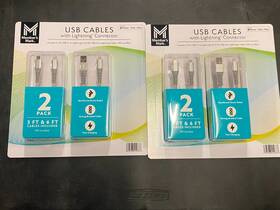
( Brand: Members Mark ), ( Type: Cable Cord ), ( UPC: 193968419837 )
Review MEMBERS MARK Lot Of Usb/usbc Cables See Picture
These **USB/USB-C cables** are meticulously engineered to deliver seamless connectivity between your **iPhone, iPad, or other Apple devices** and a wide range of peripherals, including computers, chargers, power banks, and accessories. Crafted with **high-quality, durable materials**, these cables feature a **fully shielded, braided construction** that ensures optimal signal integrity, minimizing interference and data transfer delays while protecting against wear and tear from frequent use. The **USB-A to USB-C** design provides versatility, allowing you to connect your device to older USB ports found on laptops, desktops, and other electronics, while the **USB-C to USB-C** variant ensures compatibility with the latest Apple gadgets, including the iPhone 15 series, iPad Pro, and MacBook models. Each cable is built with **low-resistance copper conductors**, enhancing both charging speed and data transfer rates for faster syncing, file transfers, and power delivery. The **reinforced connectors** are designed to resist bending and accidental disconnections, making them ideal for on-the-go use, while the **flexible yet sturdy outer jacket** prevents tangling and extends the cable s lifespan. Whether you're charging your device, transferring photos, or connecting to external displays, these cables offer **reliable, high-performance connectivity** without the frustration of slow transfers or unreliable connections. Perfect for professionals, students, and tech enthusiasts, they combine **durability, speed, and compatibility** to keep your Apple ecosystem running smoothly.
Buying a USB/USB-C cable with the model number **193968419837** (likely a generic or third-party cable) for use with an iPhone or iPad comes with several considerations. Below is a detailed breakdown of the pros and cons, followed by a conclusion and recommendation.
---
### **Pros of Buying This Cable**
1. **Cost-Effective**
Third-party cables are often significantly cheaper than Apple s official cables. This can be appealing if you are on a tight budget or need multiple cables for accessories.
2. **Availability**
These cables are widely available on platforms like Amazon, eBay, AliExpress, and various online retailers. They can be shipped quickly, especially if purchased from sellers with fast fulfillment times.
3. **Compatibility with Multiple Devices**
Many generic USB-C cables are designed to work with a variety of devices, including iPhones (starting with the iPhone 12), iPads (with USB-C ports), MacBooks, and other USB-C-powered gadgets. This versatility can be useful if you own multiple devices.
4. **Potential for Customization**
Some third-party sellers offer customizable options, such as different cable lengths, colors, or additional features like built-in USB hubs or charging indicators.
5. **No Brand Loyalty**
If you are not a fan of Apple s branding or pricing, a generic cable allows you to avoid paying a premium for the Apple logo and packaging.
---
### **Cons of Buying This Cable**
1. **Quality and Durability Concerns**
Many third-party cables are made with lower-quality materials, such as substandard copper wires or cheap plastic. This can lead to:- **Frequent breakage** at the connectors or along the cable.
- **Poor charging speeds**, especially if the cable lacks proper shielding or uses thin wires.
- **Overheating** due to inefficient power transfer, which can damage your device over time.
- **Incompatibility with fast charging** (e.g., iPhone s 20W or 27W charging, iPad Pro s 45W charging). Many generic cables do not support fast charging, leading to slower or inconsistent charging.
2. **Safety Risks**
Cheap cables may lack proper certifications (e.g., MFi Made for iPhone/iPad) or may not meet safety standards like UL, CE, or FCC. This increases the risk of:
- **Short circuits** or electrical fires.
- **Data corruption** if the cable is unstable.
- **Voiding warranties** if the cable damages your device.
3. **No Apple Support or Warranty**
Apple does not recognize or support third-party cables for warranty purposes. If the cable damages your device (e.g., by causing overheating or data loss), Apple may refuse to honor your warranty or repair claims.
4. **Inconsistent Performance**
Generic cables may not provide stable connections, leading to:- **Frequent disconnections** while charging or transferring data.
- **Audio or video glitches** when using the cable for media transfer.
- **Unreliable fast charging**, even if the cable claims to support it.
5. **Counterfeit or Fake Products**
There is a risk of receiving a counterfeit cable that may not function as advertised. Some sellers may ship cables that are not actually USB-C or may have damaged connectors.
6. **Environmental Impact**
Lower-quality cables often have shorter lifespans, leading to more frequent replacements and increased electronic waste.
7. **Potential for Data Theft**
Some cheap cables may contain malware or backdoors, though this is rare. However, it is another reason to be cautious when purchasing from unknown sellers.
---
### **Conclusion**
Buying a generic USB-C cable like the **193968419837** model can be a cost-effective solution if you prioritize affordability and do not rely heavily on fast charging or data transfer. However, the risks of poor quality, safety hazards, and inconsistent performance make it a risky choice, especially for devices like iPhones and iPads, which are sensitive to charging stability and data integrity.
For most users, the convenience, reliability, and safety benefits of an **official Apple USB-C cable** or a **certified third-party cable from a reputable brand** (e.g., Anker, Belkin, or Cable Matters) far outweigh the minor cost savings of a generic cable. If you do choose a third-party cable, it is crucial to:
- Purchase from well-reviewed sellers with high ratings.
- Verify that the cable is **MFi-certified** (for iPhones/iPads) or at least meets safety standards.
- Read recent customer reviews for reports on durability and performance.
- Avoid cables that are too cheap (e.g., under $5), as they are more likely to be low-quality.
---
### **Recommendation**
If you need a cable for an iPhone or iPad and are concerned about performance, safety, and longevity, **avoid the generic 193968419837 cable** unless you have thoroughly researched the seller and the cable s quality. Instead, consider the following options:
1. **Official Apple USB-C Cable**
- Pros: MFi-certified, reliable, supports fast charging, and comes with Apple s warranty.
- Cons: More expensive.
- Best for: Users who prioritize performance and safety.
2. **Certified Third-Party Cable (e.g., Anker, Belkin, or Cable Matters)**
- Pros: Often more affordable than Apple s cables but still high-quality, MFi-certified, and reliable.
- Cons: Slightly more expensive than generic cables.
- Best for: Users who want a balance between cost and quality.
3. **If You Must Use a Generic Cable**
- Stick to **well-reviewed sellers** (e.g., Amazon s top-rated sellers, Newegg, or Best Buy).
- Look for cables with **high gauge (e.g., 24 AWG or better)** and **MFi certification**.
- Avoid cables with **no return policy** or **extremely low prices**.
- Test the cable thoroughly before heavy use to ensure it charges your device properly and does not overheat.
In summary, unless you are certain about the cable s quality and the seller s reputation, it is safer and more practical to invest in a **certified cable** to avoid potential issues with your iPhone or iPad.
Details:
Lot of 2 Members Mark USB/USBC Cables for iPhone, iPad See Picture, Free Shipping.
specifications chargercradleio:
- brand: Members Mark
- type: Cable Cord
- upc: 193968419837
shipping chargercradleio:
- cost: $0.00
- service: USPS Ground Advantage, UPS Ground
- class: Standard
- transit: 4-10 Days
- carrier: USPS, UPS
- type: Fixed
payments chargercradleio:
- credit card: Mastercard
- wallet: Apple-pay
- other
returns chargercradleio:
- policy: No Returns
seller chargercradleio:
- city: Richmond, Virginia
- # reviews: 1882
- rating: 99.5%
general chargercradleio:
- condition: New
- Cell phone Accessories > Cell Phone Accessories > Chargers Cradles
offer chargercradleio:
- availability: In Stock
- started: March 2, 2026
- options: Ship-to-home
- quantity: 2
- sold: 0
- best offers: True
Members Mark 193968419837 Is Similar To:
- 193968013868 Members Mark Usb Power Pack For Devices (41.5% similar) Good product. Electronic office. New condition...(May 23rd, 2022)
- Open Box Members Mark Usb Power Pack For Type-c Devices (45.1% similar) This Members Mark usb-c power pack includes a high-power 2-PORT usb-a and usb-c car charger, a 2-PORT usb-a usb-c travel charger and a 6FOOT usb-c 2.0 cable. Enhanced strain relief design to prevent cable damage at the point of termination caused by tension, vibration, or motion. The CONVENIENT6FOOT...(June 12th, 2022)
- Members Mark 11z02010000101 Micro Usb Power Pack Car And Wall Charger (43.5% similar) Members Mark micro usb power pack car wall charger - used like new condition, this includes a high power 2-PORT usb-a car charger, travel and two 6 micro cables. The micro usb power pack is designed specifically to charge devices requiring a connector. The convenient 6 micro usb charging cable can ...(September 24th, 2024)
- Members Mark 11z04020000181 8 Pin Usb A Power Pack Car And Wall Charger (43% similar) This power pack is MI-certified and designed specifically to charge devices requiring a 8PIN connector. The convenient 6' 8PIN charging cables can be used with the car charger and wall included or connected to a computer. Members Mark 8 pin usb a power pack car wall charger:: this 8PIN includes a ...(January 7th, 2025)
- Members Mark 71z02010000011 Usb-c To Cable Power Kit (44.6% similar) Part #: Members Mark 71Z02010000011 for sale...(January 31st, 2025)
- Dcyourhome Xx5pcs251 17 Inch Grill Burners Replacement For Members Mark Gr2039201-mm-00 Bbq Parts Sta (23.5% similar) Item model number: X5PCS251. 17 replacement grill burner for Members Mark GR2039201-MM-00 gas grills; gas tubes grill chef BIG-8116 parts. Is discontinued by manufacturer: no. Country of origin: china. Grill replacement for SAM's club model's ST1017-012939, ST1017-01, MEV808ALP bakers, chefs parts. ...(August 2nd, 2025)
- Members Mark 193968419868 Usb Type-c Power Kit (54.8% similar) Members Mark usb type-c power kit...(August 2nd, 2025)
- Members Mark 193968419820 Dual Port Fast Charging Kit Light For Iphone Ipad (61.4% similar) Features: cables feature strong strain relief for bending resistance and tangle-free design; chargers include led indicators easy port location. Kit contents: includes two 6FT durable braided cables with aluminum housing, one dual-port 32W pd wall charger, and car charger. Compatibility: MI ...(March 28th, 2026)
